

Genetics
Major: Genetics and Biotechnology
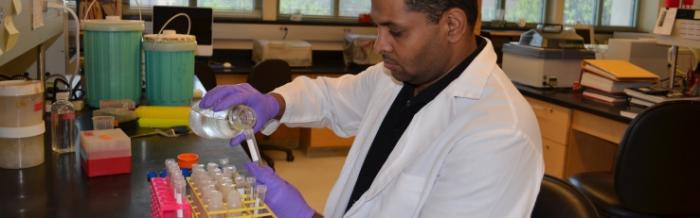
Have you ever wondered why your hair or eye color, facial features, or the build of your body resembles that of your parents, grandparents, or other close relatives? What factors are responsible for generating the variety of colors and shapes of flowers, trees, and different types of animals? If these questions have crossed your mind, then you have been thinking about genetics — the science of heredity.
Genetics is the science of heredity and variation in living organisms. It is studied at the DNA, gene, and genome level (molecular genetics, biotechnology, genomics, and bioinformatics), at the level of organisms (classical or Mendelian genetics), and within and among populations (population and quantitative genetics). One of the most significant scientific accomplishments in history has been the use of genomic technologies to identify most human genes, as well as genes in many animals, plants, fungi, and bacteria.
Undergraduates in the Genetics program must earn a grade of C or better to receive credit for required Basic Science Background and Genetics Core courses. Within the Genetics Core curriculum, Tier I courses must be taken by all majors for a total of 28 credit hours. To accommodate differing interests, Tier II courses (11–13 credits) allow specialization. Ethical considerations of genetic technologies are integrated throughout the curriculum, including a focused course on Science and Ethics in Tier III.
Genetics Resources